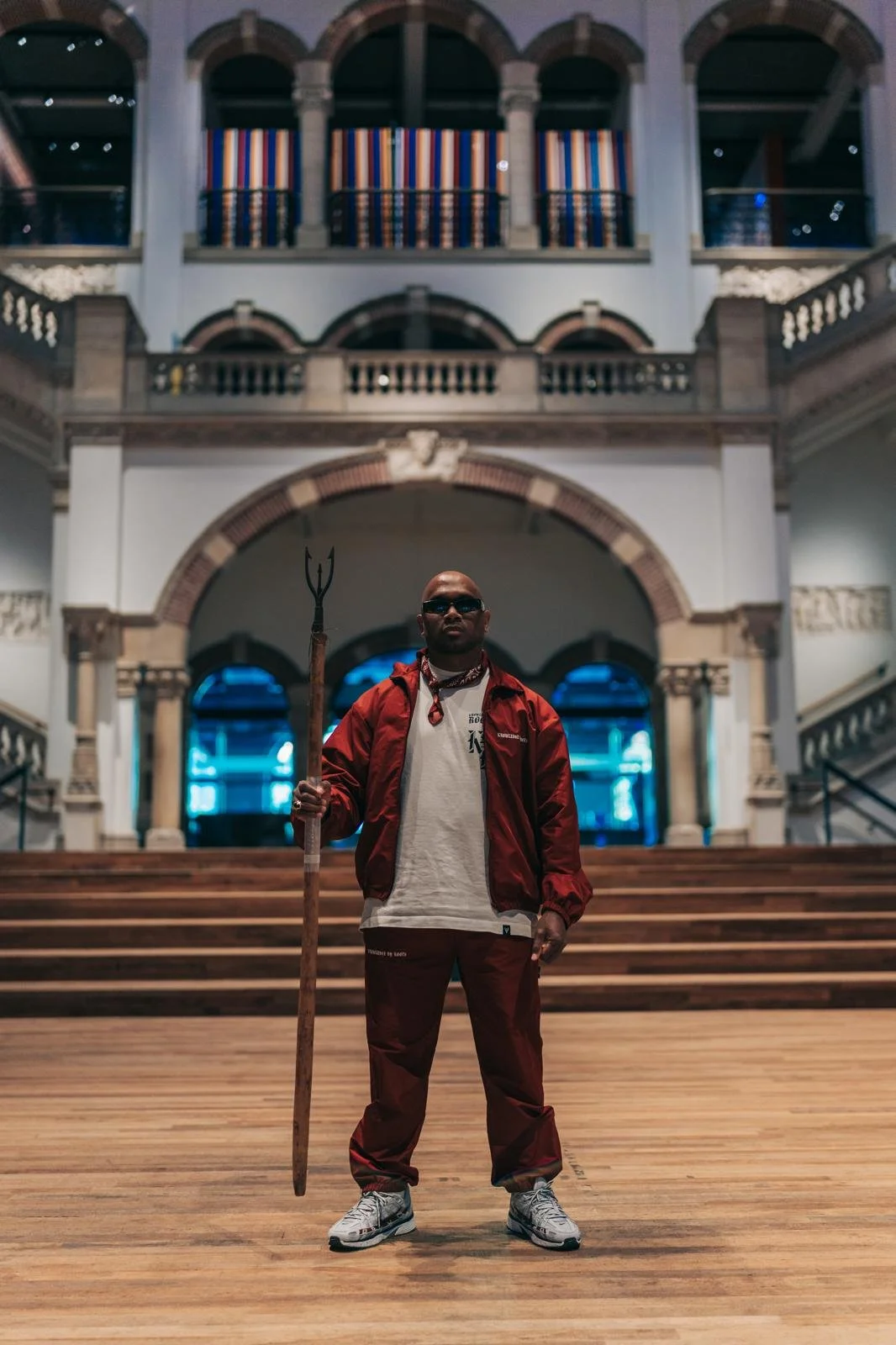
BEYOND THE COLLECTION
Beyond The Collection is a community-centered research and long-term collaboration program engaging with colonial collections together with the communities connected to them. Moving beyond ownership and preservation, it creates space for shared authority, lived knowledge, and collective decision-making about the care, value, and future of these collections.
Short fragment of DIASPORA
BEYOND THE COLLECTION was sparked by our own work experiences and practices, starting in 2020 with our documentary on restitution and colonial collections DIASPORA: Heritage in Motion (2020)
Beyond The Collection is a long-term program focused on community-led research and collaboration around colonial collections. It centers people and communities directly connected to these collections, across countries of origin and diaspora, so that situated knowledge, values, and lived realities are embedded in how collections are understood, cared for, and carried forward.
Through participatory research, storytelling, and community archiving, the program supports shared meaning-making and shared decision-making about the future of colonial collections. Rather than starting from institutional agendas, it is grounded in relational practice: listening, co-creating, and cultivating care-based approaches and shared authority. This supports processes of repair rooted in relationality, reciprocity, cultural knowledge, and collective responsibility.
Beyond The Collection operates both in dialogue with institutions and beyond institutional walls, creating space for community-led methods, ritual practices, and ways of knowing and being that have long been marginalized within dominant heritage frameworks.
Background
Beyond The Collection began in 2021, when the Mondriaan Fund invited Beyond Walls to develop sessions on colonial collections and Dutch restitution policy for the conference HERE: Heritage Reflections. We named our sessions Beyond The Collection and explored colonial heritage beyond institutional and academic frameworks, centering the perspectives and needs of diaspora and source communities while critically reflecting on how coloniality continues to shape institutions, policies, and ourselves.
Drawing on our own practices, including fragments from the documentary DIASPORA (2020), these conversations evolved into an ongoing program developed in close collaboration with communities.
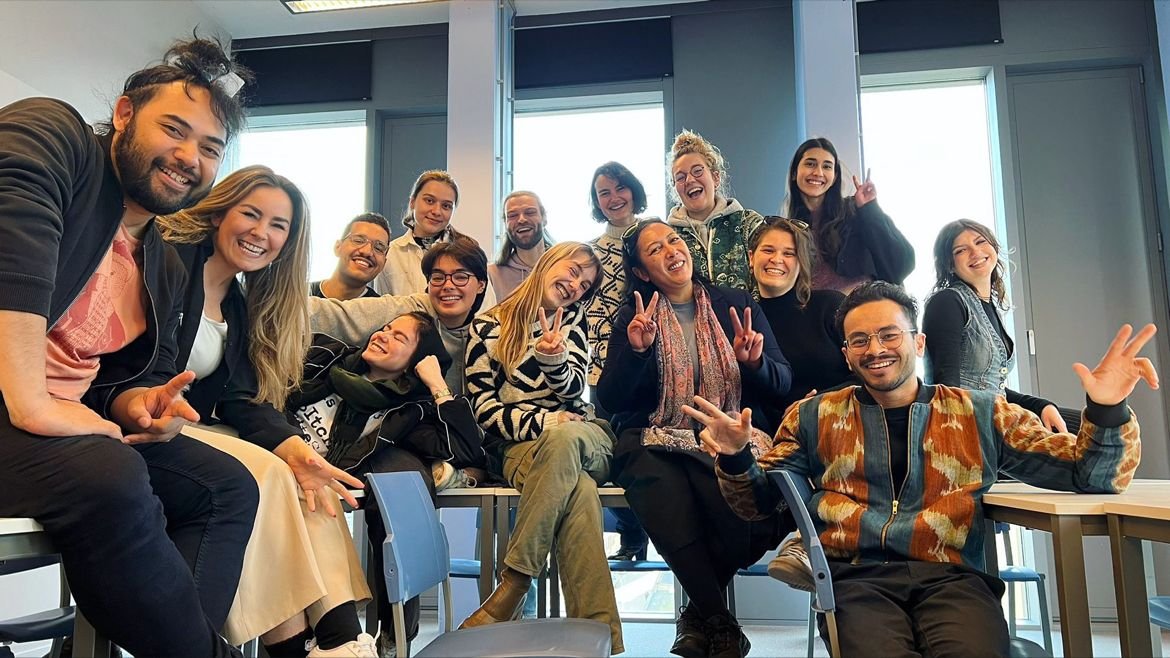
25 May 2022 Kick-off of our collaboration with students of the Universiteit van Amsterdam
Education & Research Collaboration
Since 2022, Beyond Walls collaborates with the University of Amsterdam within the Bachelor program Practicing Ethnography (Anthropology), initiated by Dr. Yatun Sastramidjaja.
Each year, students conduct research inspired by Beyond The Collection, engaging with questions around colonial collections, community-led research, and relational heritage practices. Their findings and interactions contribute to the ongoing development of the program, while also engaging future academic and heritage professionals working in the field of decolonial heritage practice.
Collective Care for Ancestors
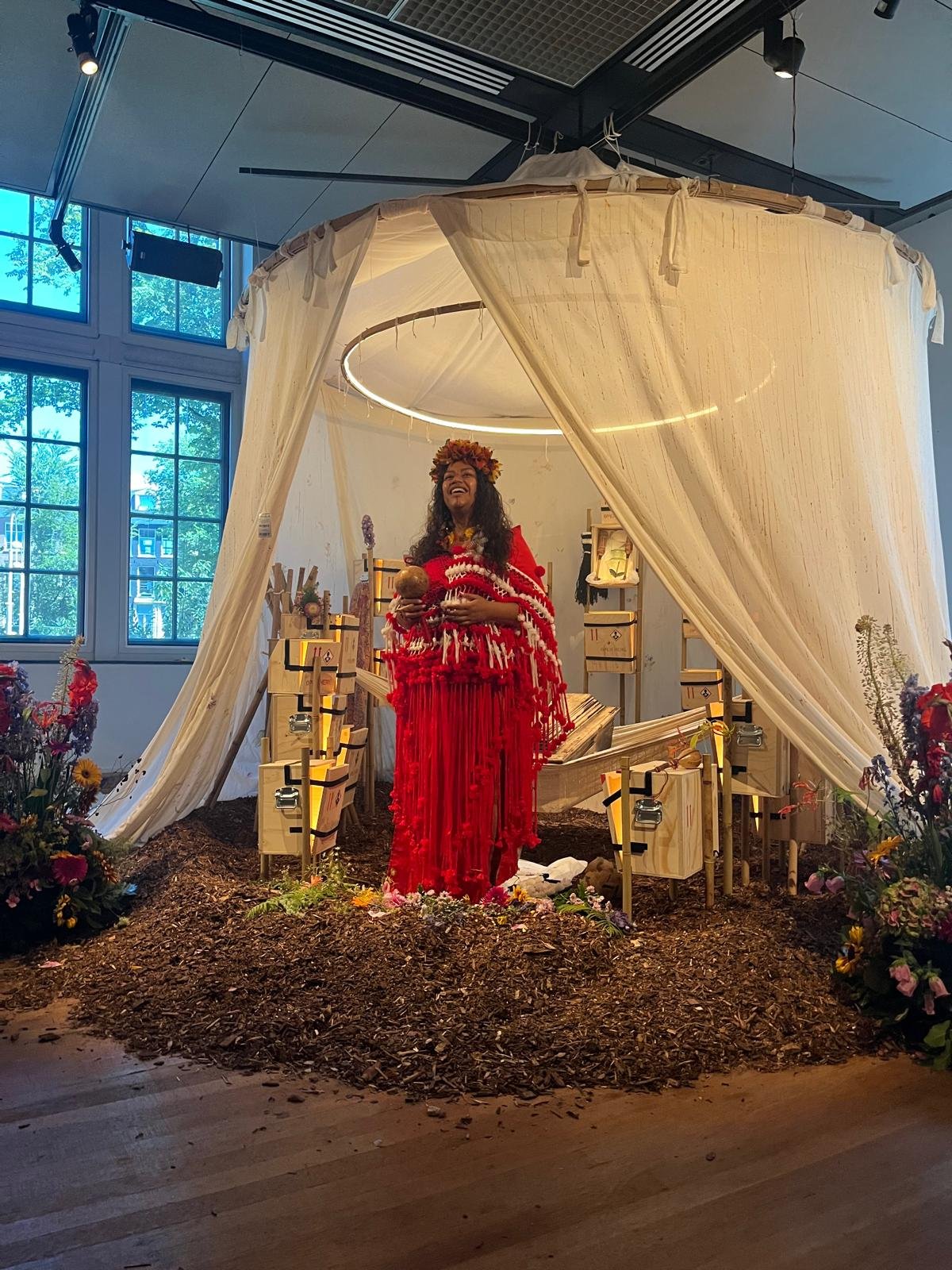
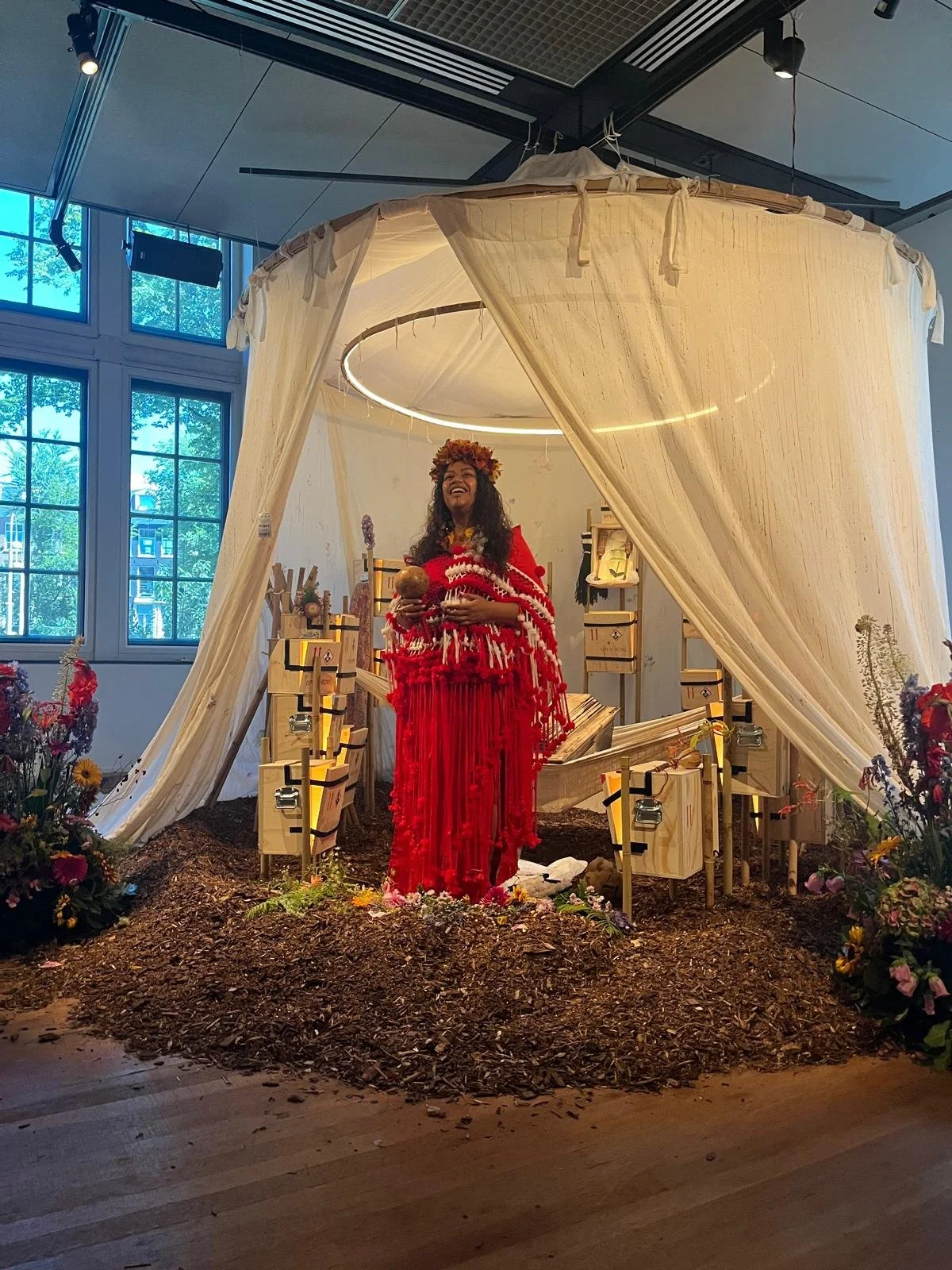
Manuwi C. Tokai during the opening of the memorial altar, where the wooden boxes are replicas representing the presence of ancestral children in the museum.
Remembering and honoring ancestors
Since 2022, Beyond Walls has been working in long-term collaboration with multidisciplinary Kalinya Terewuyu artist and community builder Manuwi C. Tokai. This collaboration emerged from an intensive shared process around Dichter bij Onze Koloniale Erfenis and Manuwi’s performance Dear Ancestors We Miss You, which centered care, mourning, and the dignity of ancestors held within museum collections.
Trigger Warning sensitive content
As stated on the Wereldmuseum website, their collection includes 3,647 ‘objects’ containing ancestral human remains, such as bones, hair, and teeth embedded in artefacts. It also includes 26 premature and newborn babies preserved in fluid, underscoring the deeply sensitive and complex nature of this part of the collection. The museum acknowledges that ancestors are not ‘objects’ but people with stories and spiritual meaning, tied to histories of loss and injustice. They are no longer displayed, nor are they visible in Manuwi’s installation, and remain in museum storage, awaiting an appropriate and dignified final destination.
In 2025, Manuwi initiated the creation of a memorial altar, a permanent, care-based installation developed in collaboration with people from various communities and the Wereldmuseum Amsterdam. The altar functions as a space for mourning, remembrance, and honoring life, making visible what is often kept out of sight. Rather than displaying the ancestral remains, the altar affirms their humanity: ancestors are not “objects,” but people with relationships, histories, and spiritual significance.
Through this work, Manuwi opens space for dialogue with other communities whose ancestors may also be present within museum collections, inviting collective reflection, recognition, and responsibility.
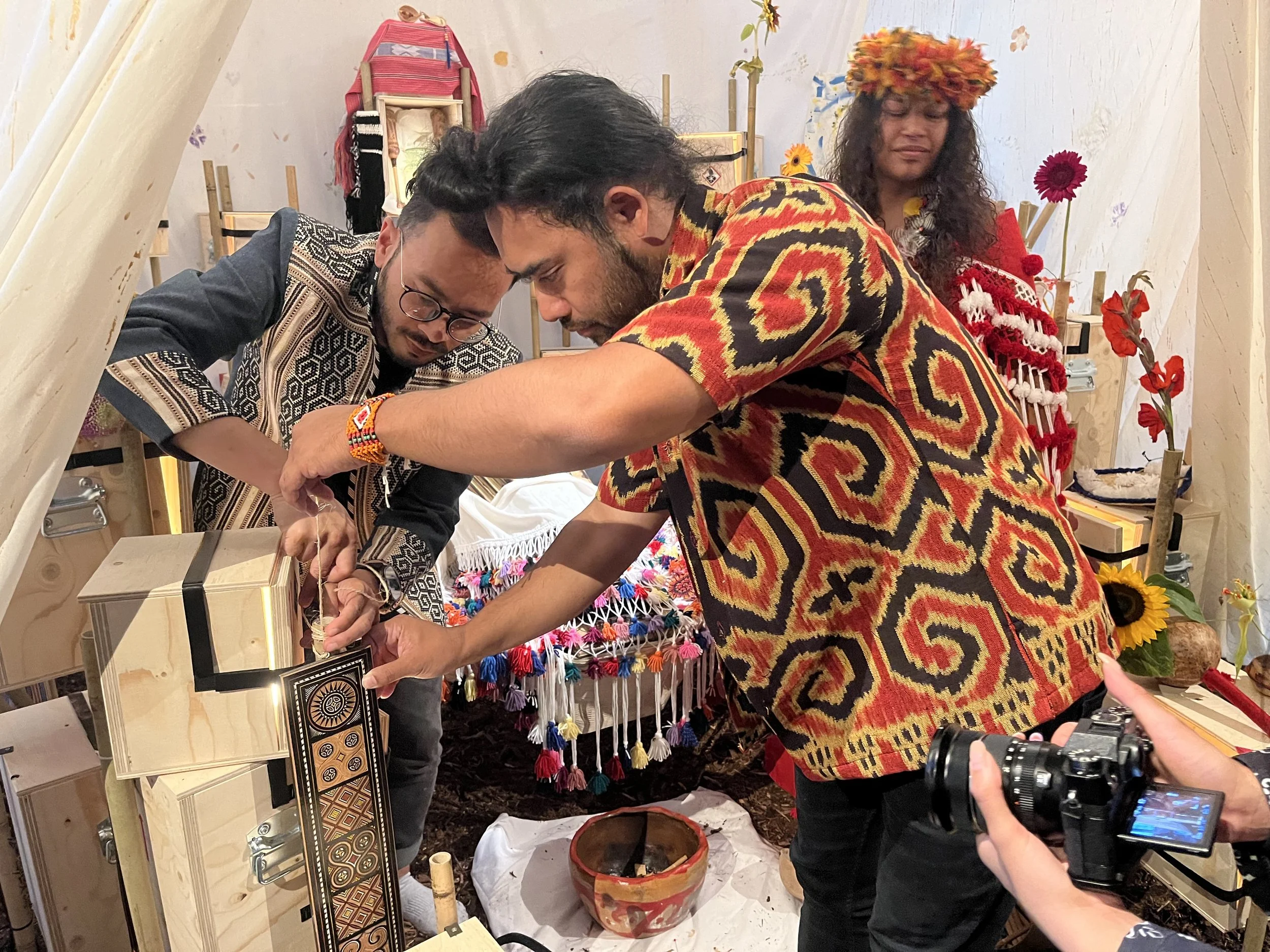
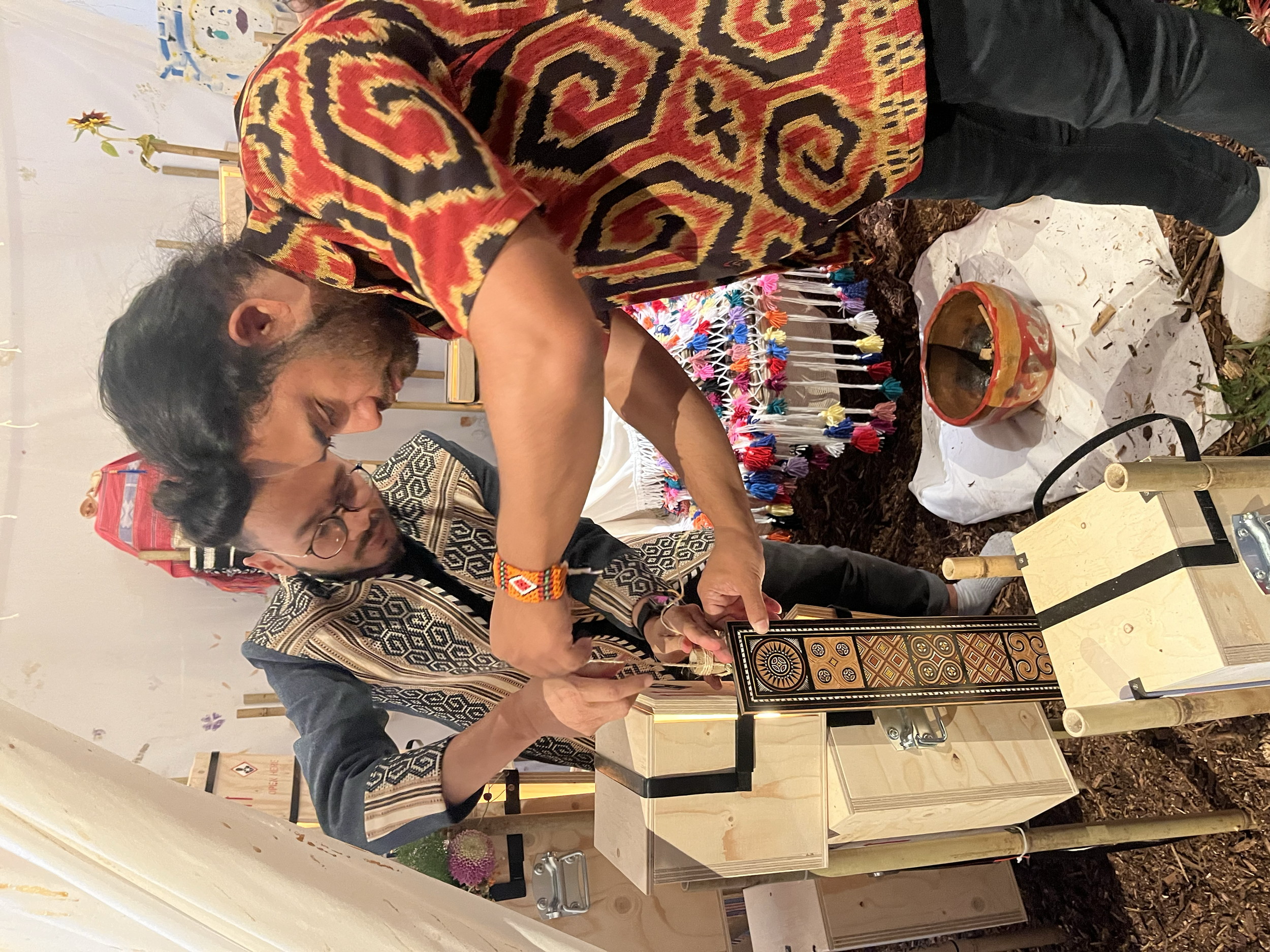
Armando Ello and Jeremy Flohr placing artifacts from Toraja in Manuwi C. Tokai’s memorial altar, where three wooden boxes are replicas that symbolize the presence of three Torajan children in the museum depot.
Ancestral Human Remains from Tana Toraja and Timor
During the collaboration with Manuwi the process brought to light that the museum’s collection also includes ancestral human remains connected to Tana Toraja and Timor. This opened up new trajectories within Beyond The Collection, grounded in dialogue with community representatives and ongoing conversation with the museum to explore careful and appropriate next steps.
“A wooden box. With no name on the label. Who was he or she? How was it taken away? And why? Could this Torajan Child be one of my direct ancestors within my family tree? But here, there is no family. And there is no tree. No Pohon Tarra to protect the soul, to take care of the body. There is only the darkness and the loneliness of a cold chilly museum depot, deep down below.” - Jeremy Flohr
La Galigo within Beyond The Collection
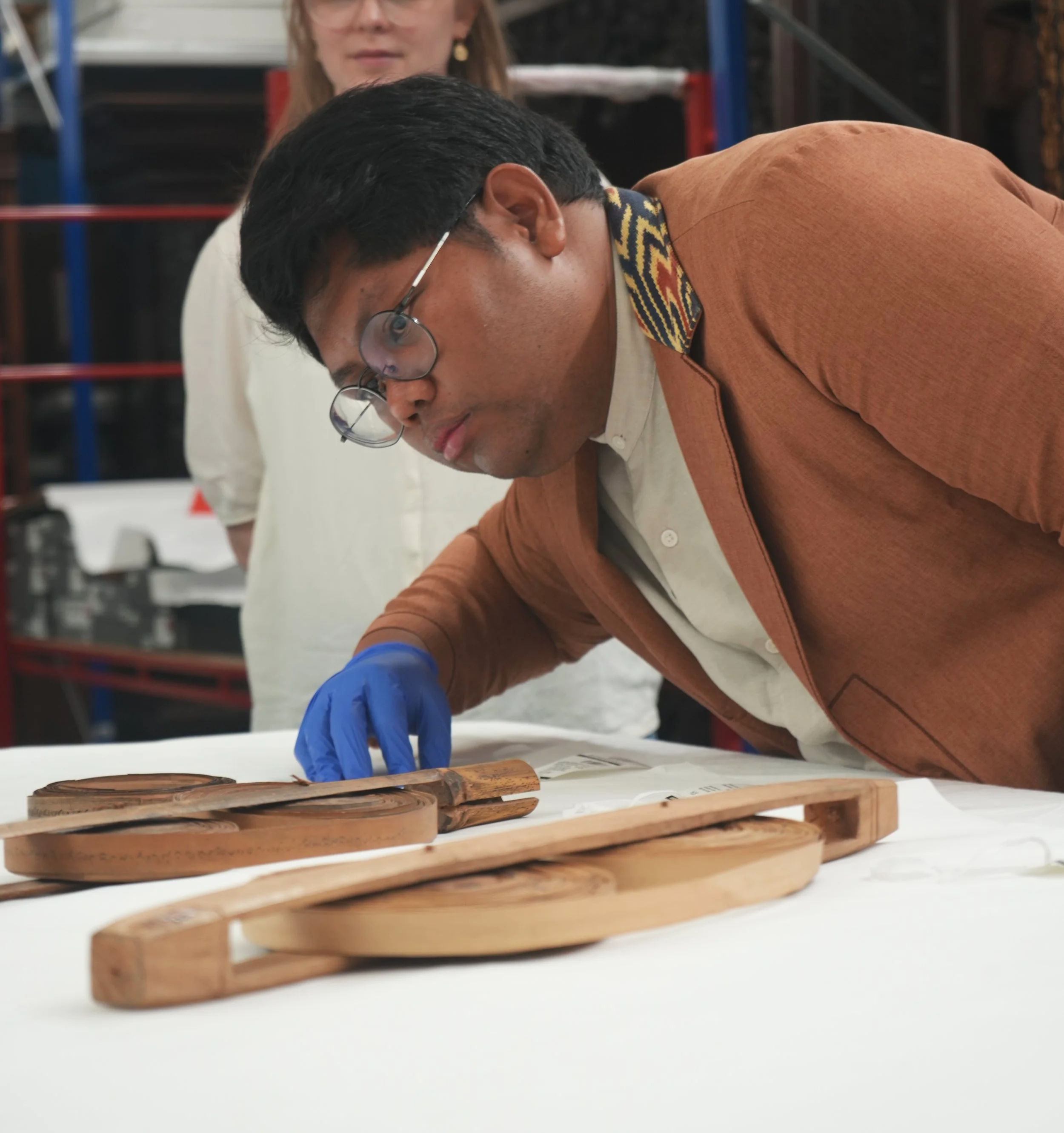
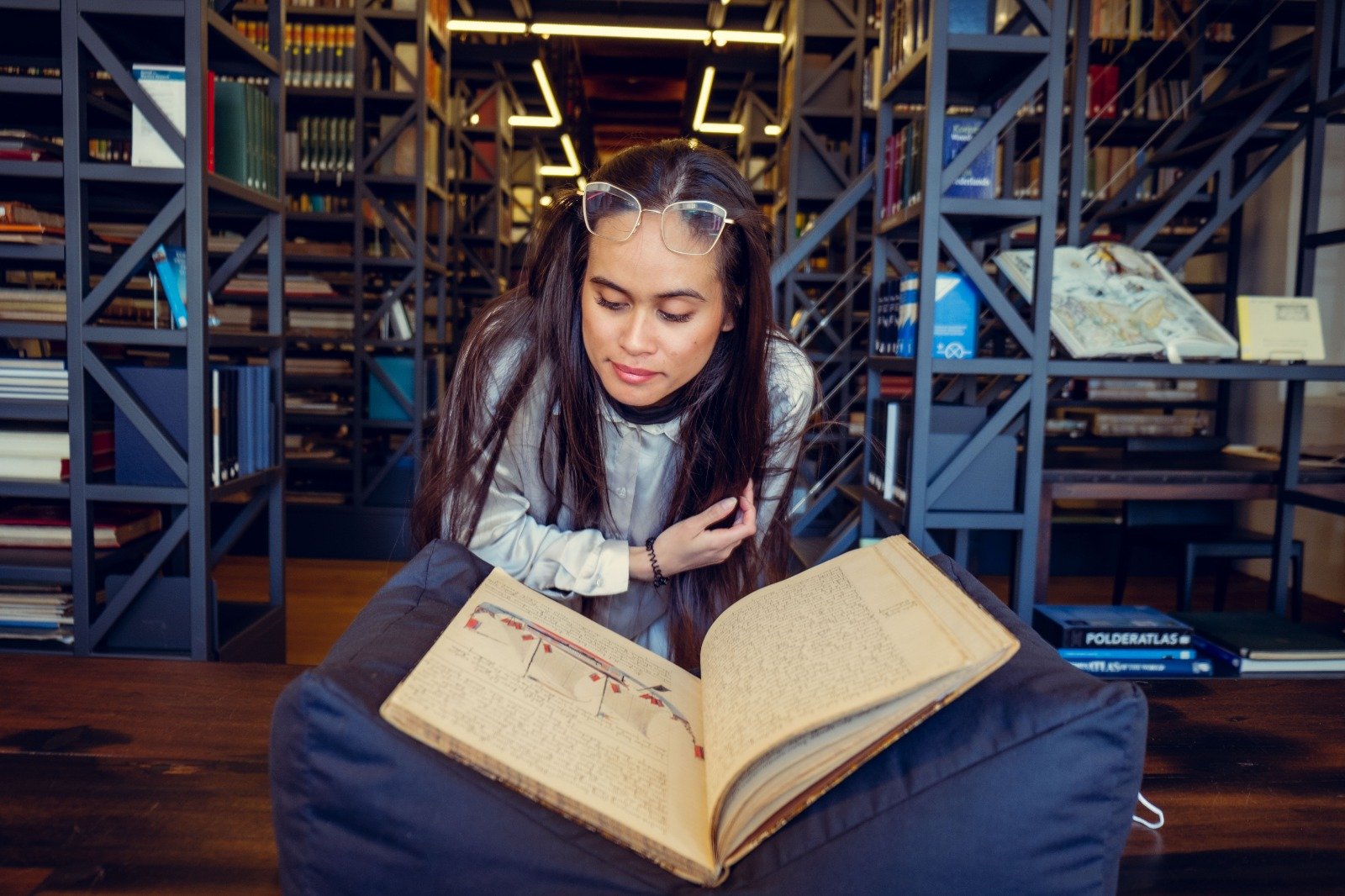
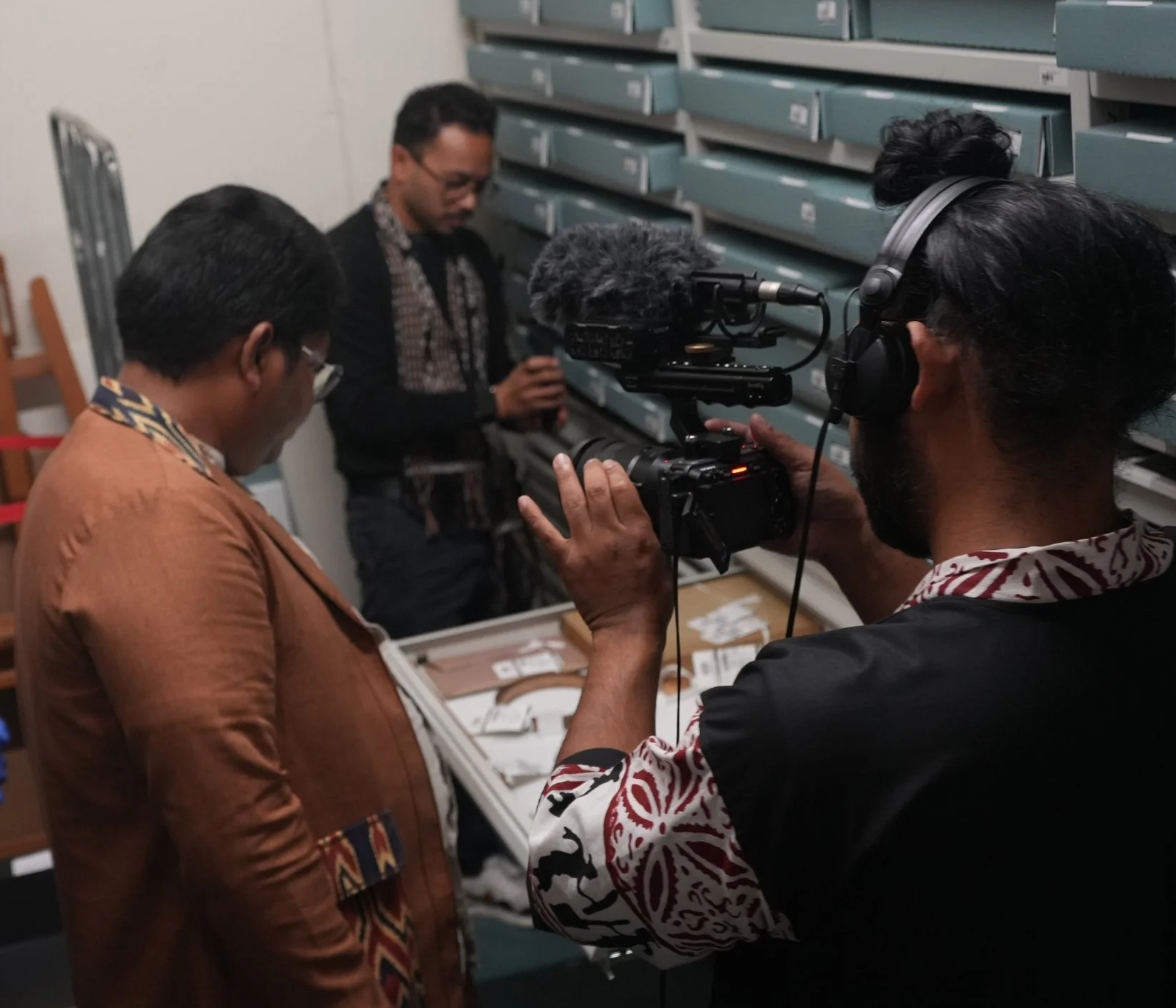
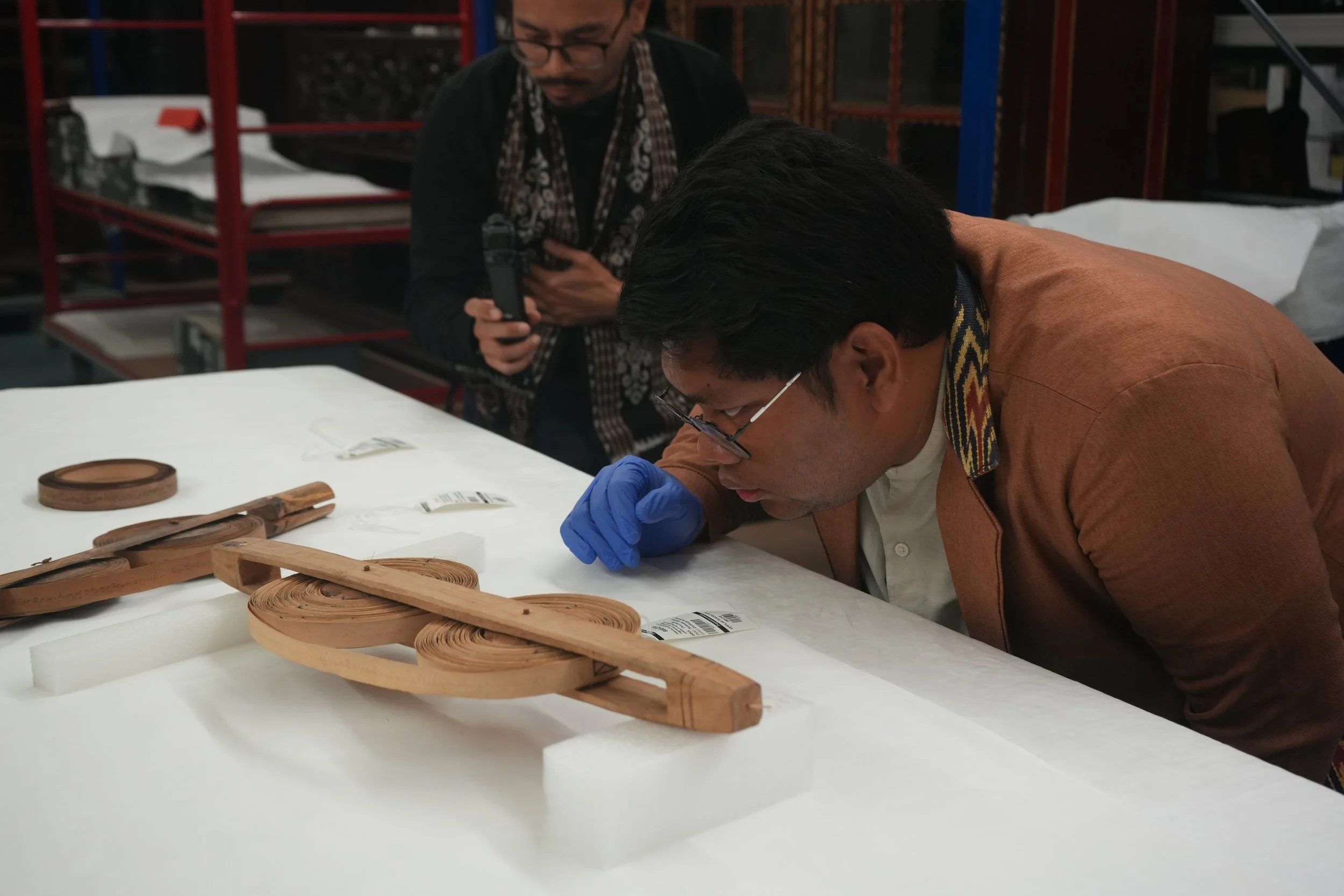
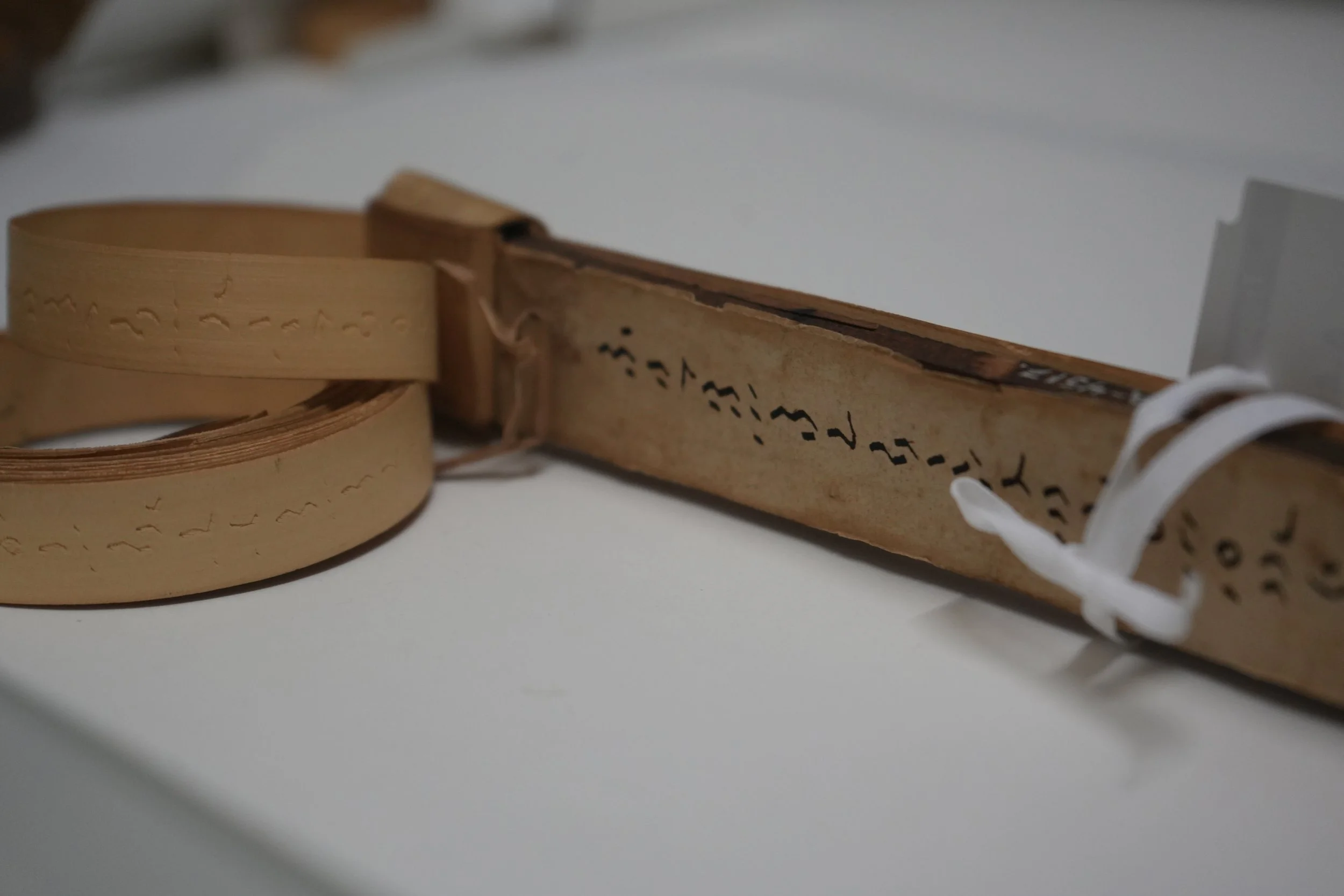
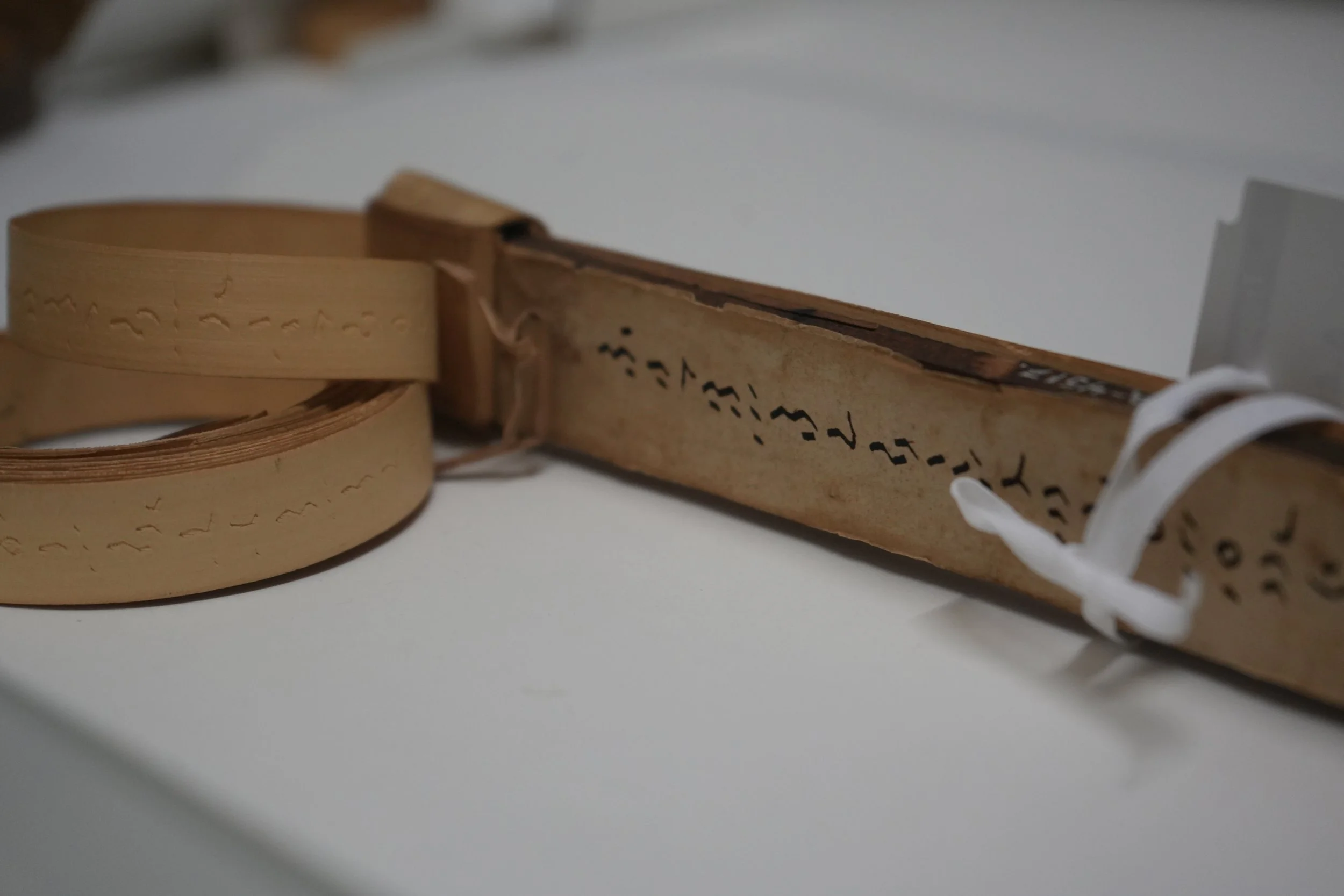
During our recent depot visit in Wereldmuseum Amsterdam, Louie Buana encountered fragments of the La Galigo manuscripts preserved on fragile palm leaves. All photo’s by Randu.
La Galigo and Beyond.
During the Beyond Walls international exchange program WANUA, the La Galigo manuscript emerged as a key source of inspiration. This epic Bugis text, written in poetry on palm leaves and rooted in oral traditions from South Sulawesi, is widely regarded as the most extensive literary work in the world. Dating back to around the 14th century, La Galigo originates from the former Bugis kingdom of Luwuq and reflects pre-Islamic, epic-mythological worldviews.
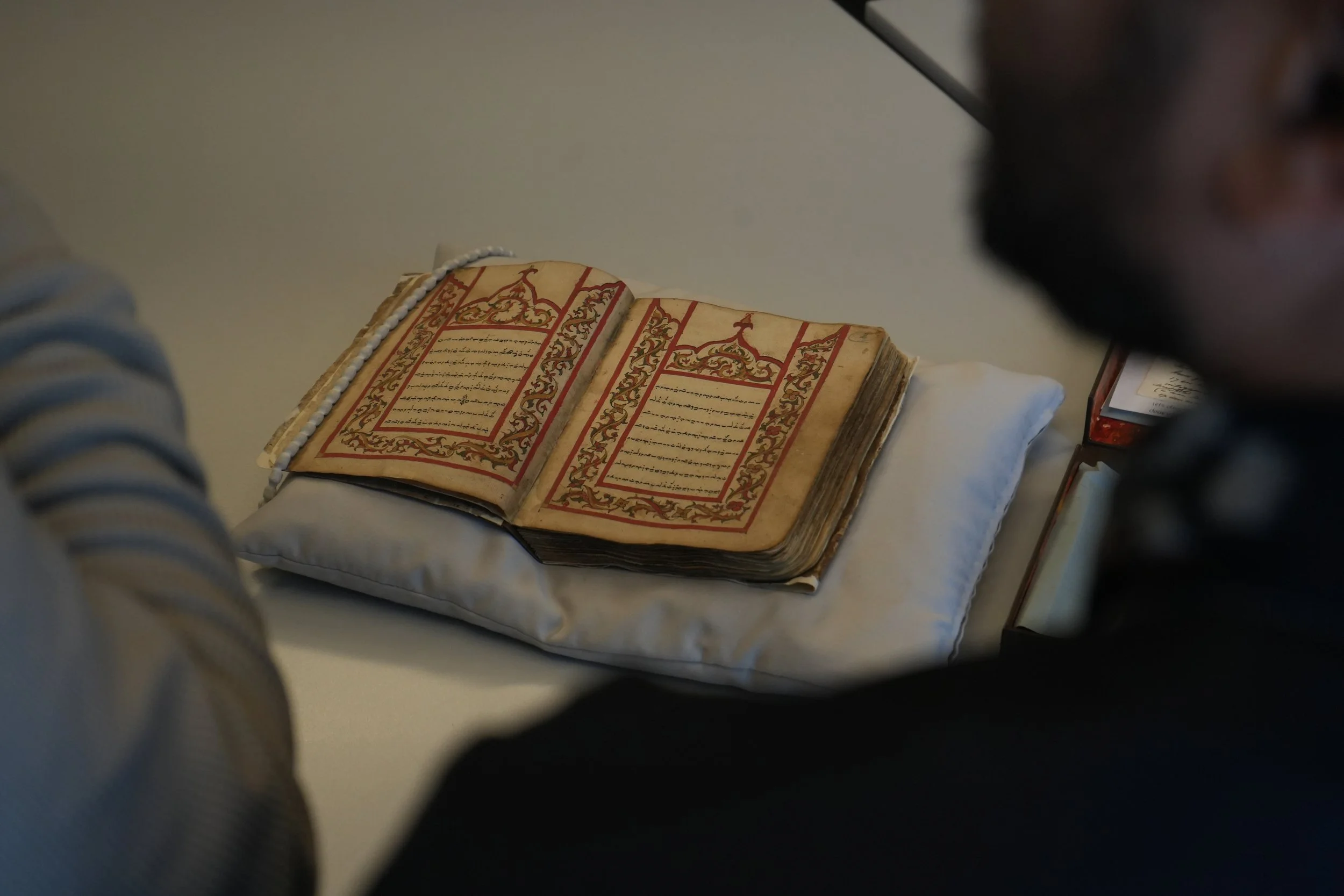
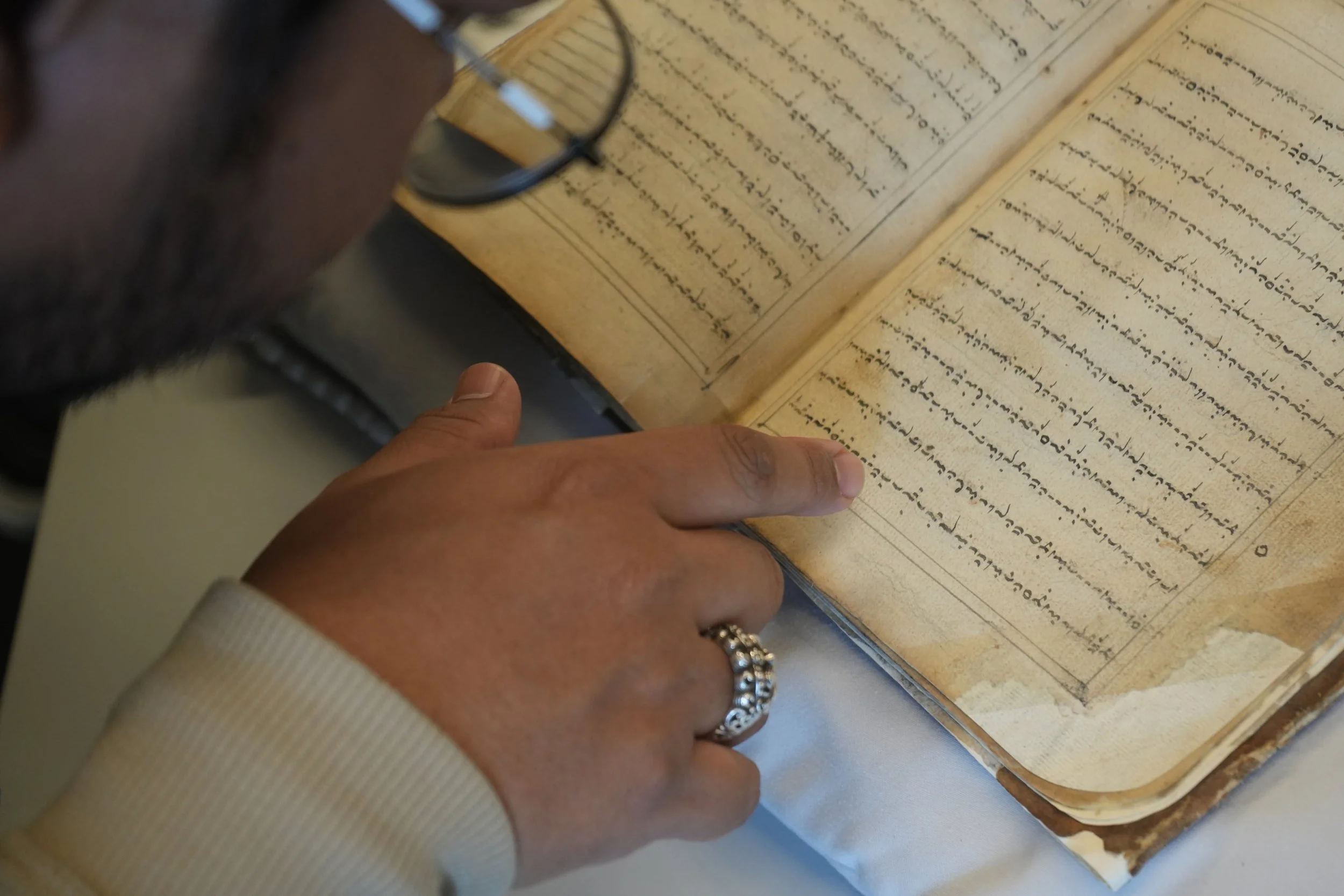
As documented in Dutch collections, the majority of La Galigo manuscripts, many copied in the 19th century by Colliq Pujie while in exile, are held in archives in the Netherlands, including Leiden University, alongside holdings in other institutions such as Wereldmuseum Amsterdam and Bibliotheek Zeeland.
Within Beyond The Collection, we collaborate with writer, PhD researcher, and heritage storyteller Louie Buana, who connects La Galigo to living communities, contemporary storytelling, and questions of knowledge restitution.
Through this collaboration, La Galigo is approached not only as a literary masterpiece, but as living heritage, carrying cosmologies, histories, and relationships that continue to resonate across Sulawesi, the diaspora, and the Netherlands.
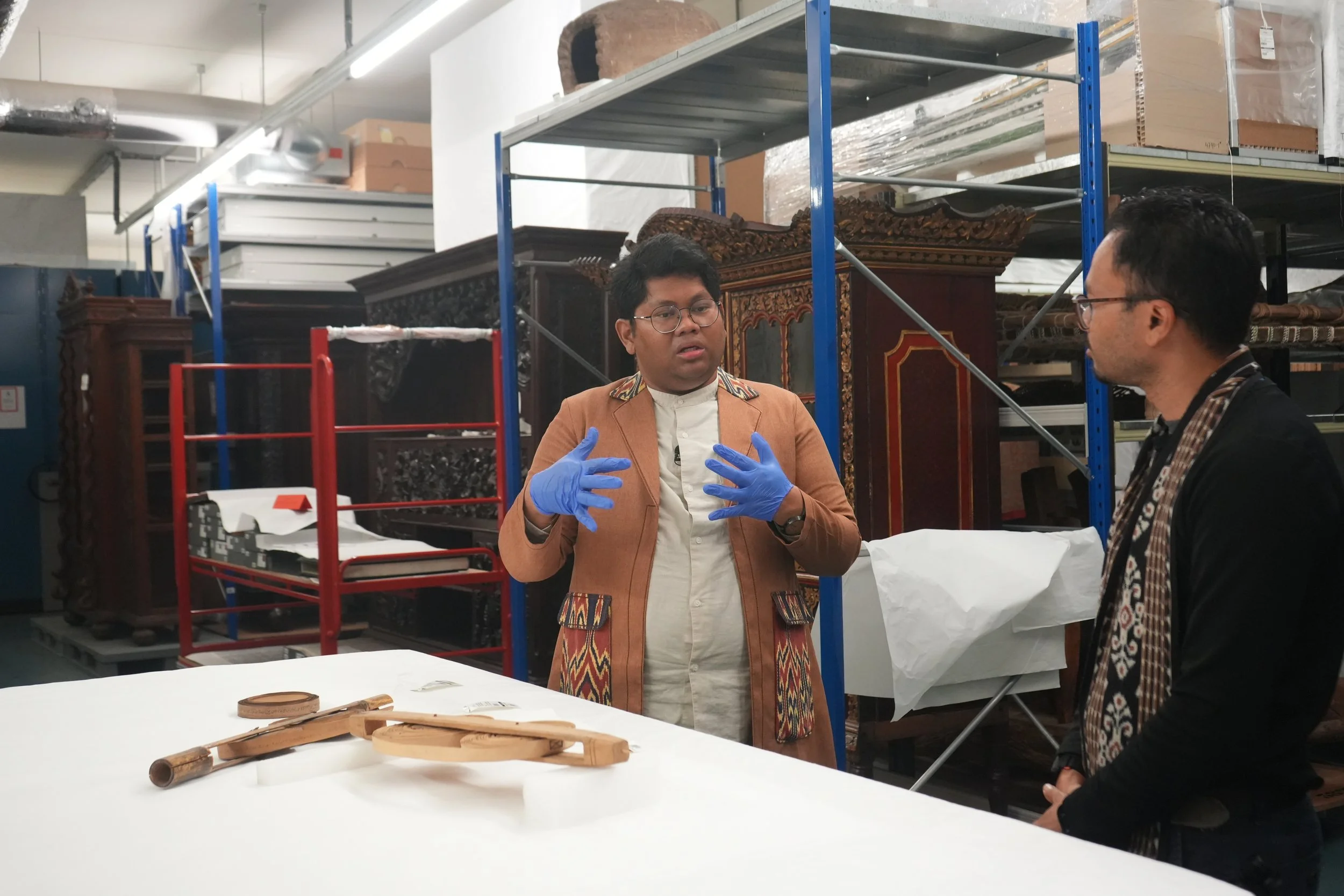
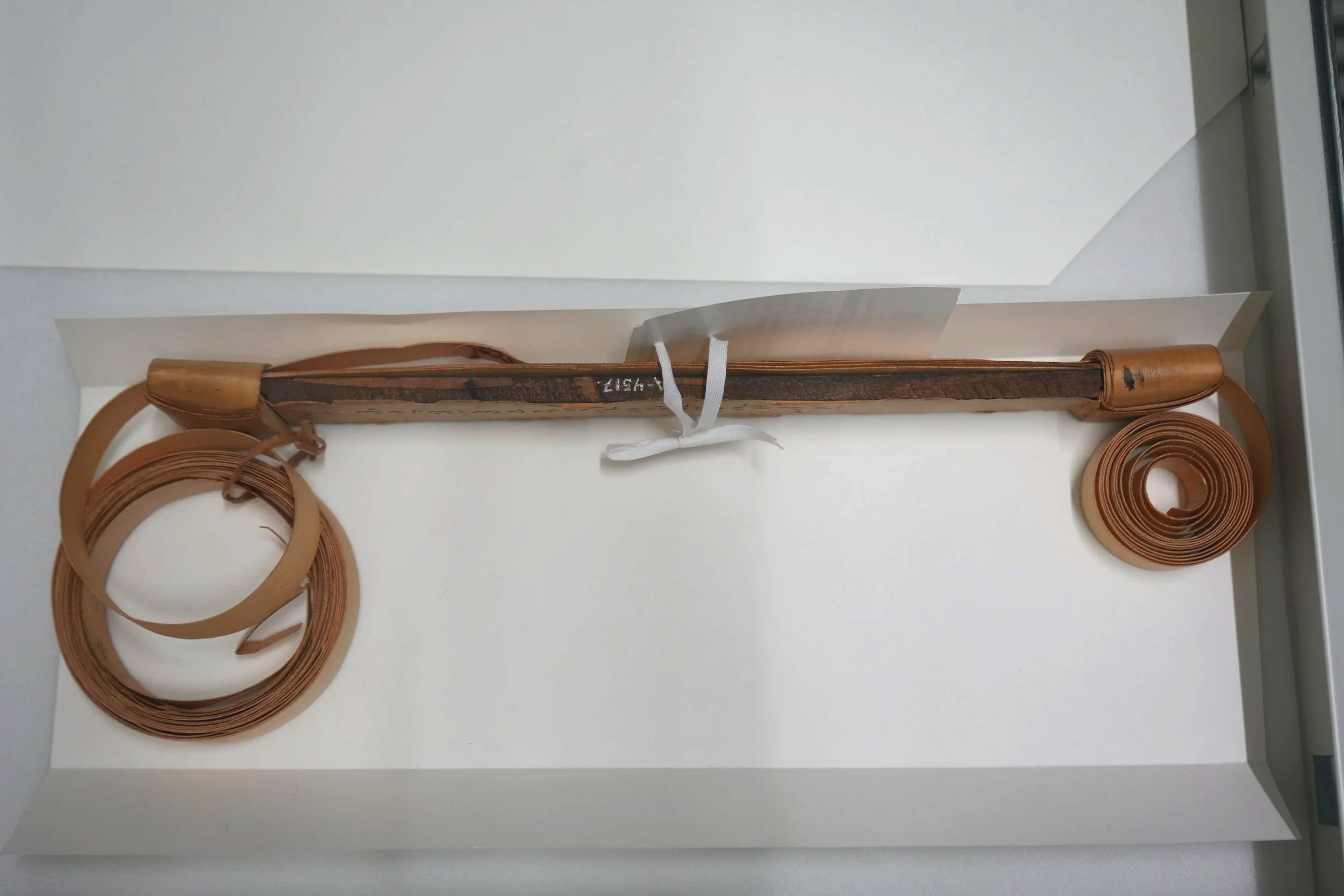
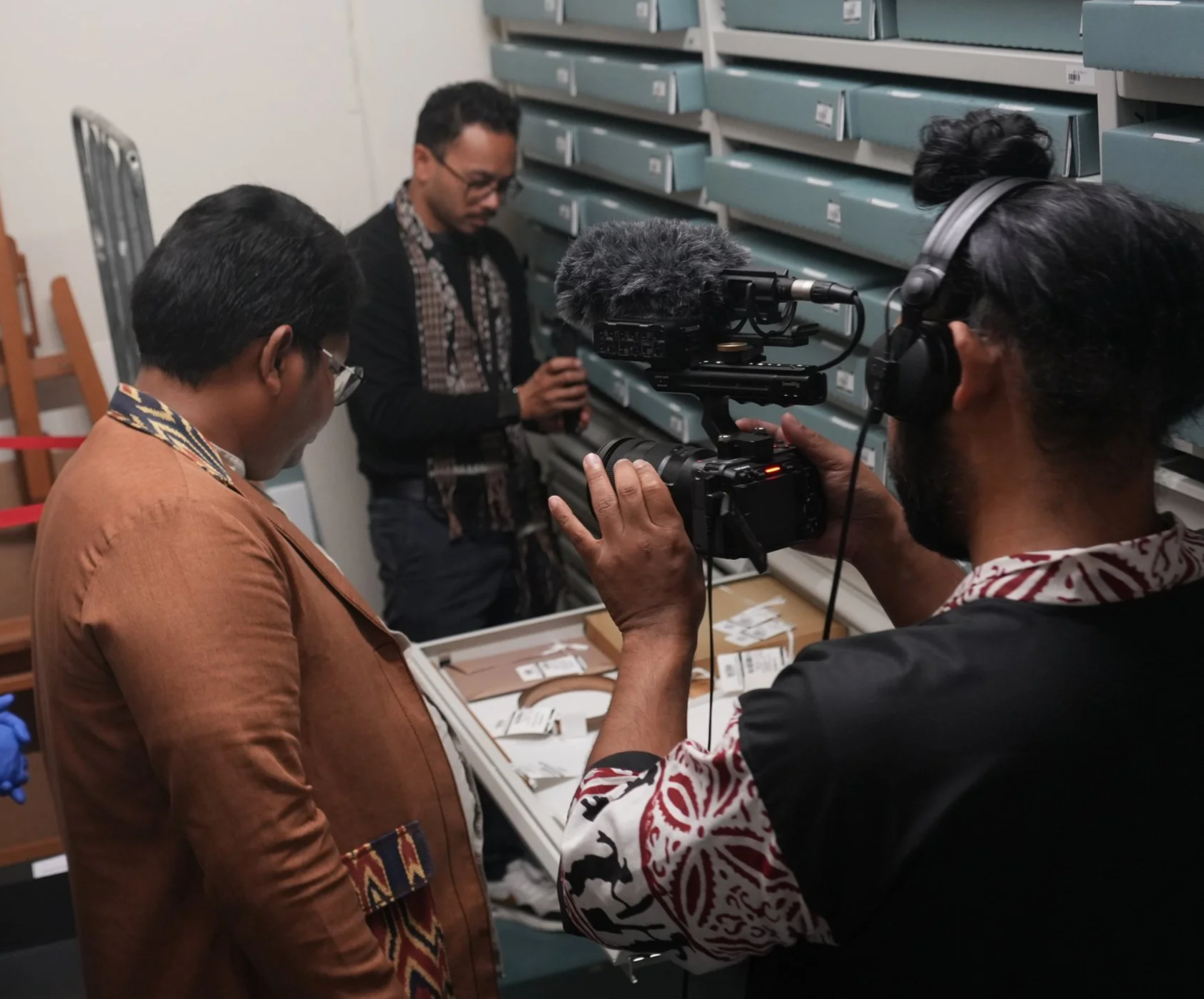
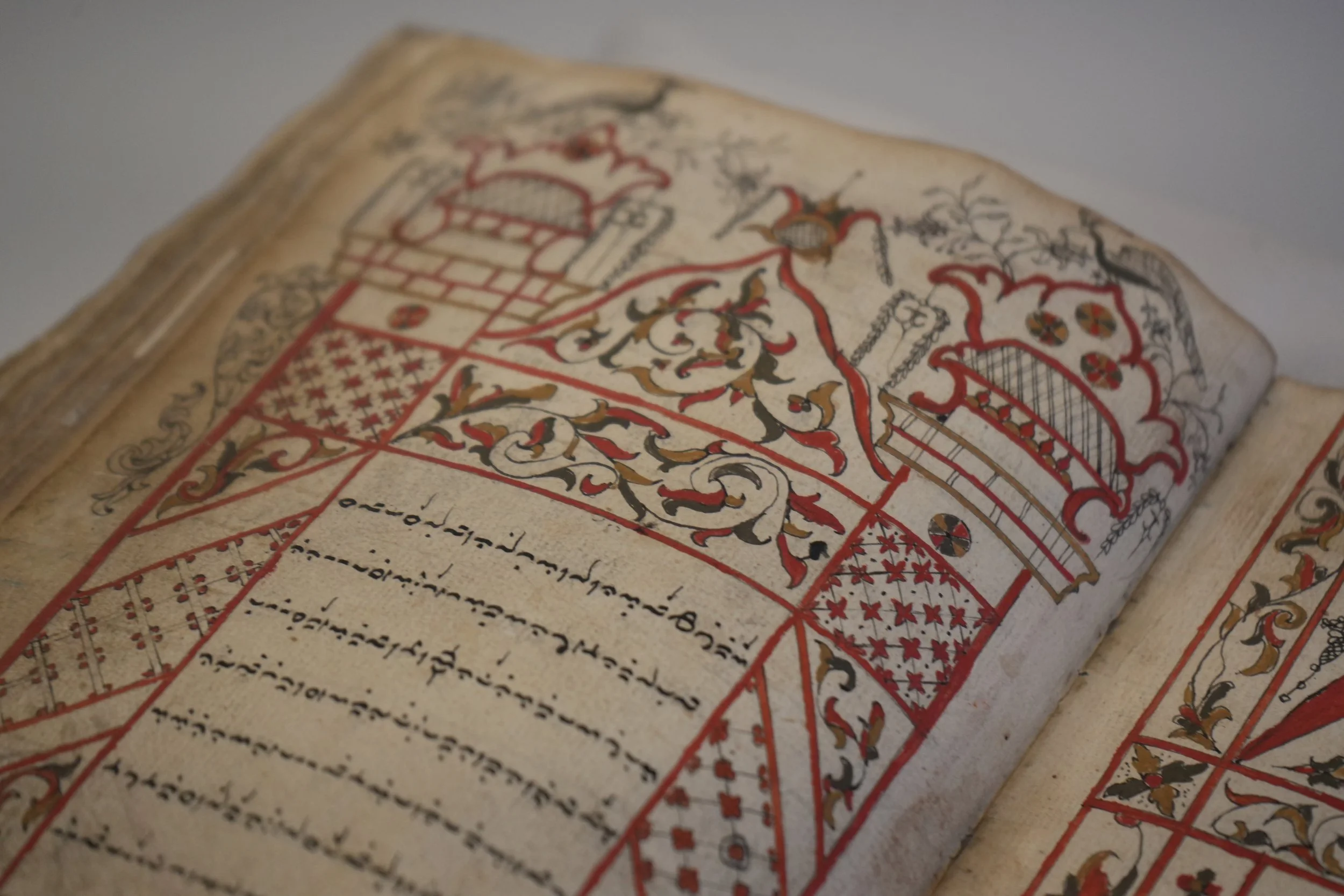
A page of an eighteenth-century manuscript fragment of the La Galigo epic, held in the collection of the Zeeuwse Bibliotheek. Captured by Randu during our recent collection visit facilitated by the Zeeuwse Bibliotheek.
“Through La Salaga and the vast cosmos of La Galigo, we rediscover the ancient bonds between Makassar and Maluku, ties forged long before colonial borders, in shared seas, sacred kinships, and ancestral exchange.
Projects like these create space for us, across islands, continents, and generations, to retake the knowledge, to hold our past in our own hands, and to speak our stories in our own voices.”
— Louie Buana, PhD Candidate, researcher and storyteller
Connect with us through Beyond The Collection
Beyond The Collection is an ongoing program shaped through long-term collaborations. Behind the scenes, we are in conversation with a growing network of people and communities. New trajectories are unfolding, and more information will follow. If you feel connected to Beyond The Collection or would like to explore possibilities for collaboration, you are warmly invited to reach out.
Beyond The Collection is supported through a grant from the Amsterdam Fund for the Arts (AFK).
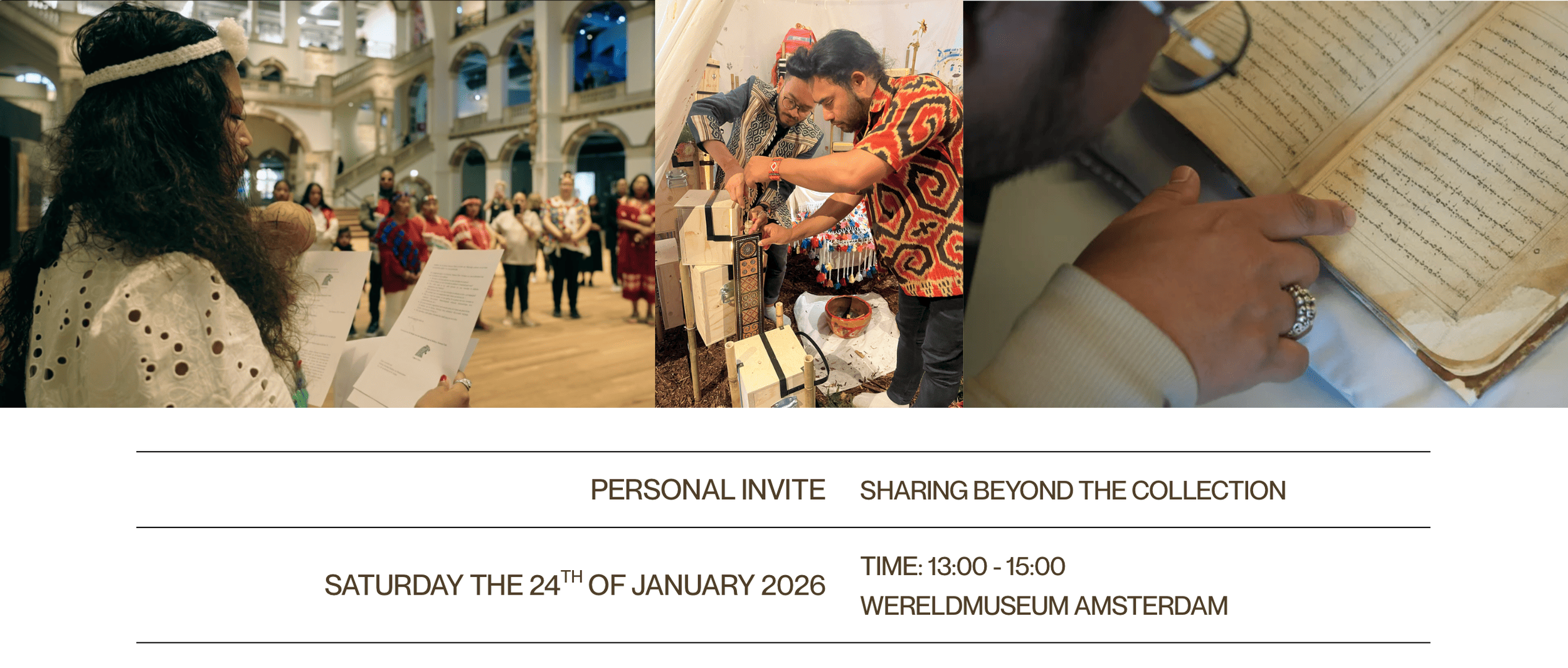
SHARING BEYOND THE COLLECTION - Gathering at Wereldmuseum Amsterdam
What is being remembered at a memorial altar initiated by Manuwi C. Tokai and what does it ask of us today?
On 24 January 2026, 13.00 - 15.00, we invite you to gather at the memorial altar in Wereldmuseum Amsterdam for a sharing session as part of our program Beyond The Collection.
This gathering is an invitation to slow down, to listen deeply, and to collectively sense what these stories of ancestral remains ask of us today. What becomes possible when we move beyond institutional frames and share knowledge, lived experiences, grief, and resistance together?
We will reflect on how communities relate to ancestral belongings and how we can build practices rooted in care, responsibility, reciprocity, and healing, moving Beyond The Collection.
You are warmly invited to bring your voice, your questions, and your presence.
Please sign up before 21 January via the form.
Voor Nederlands: klik hier.
We hope to see you there.